Wireless charging is no longer just about convenience; it's about heat management and protocol alignment. With the rise of Qi2 and MagSafe, choosing the right manufacturing partner is critical to avoiding high return rates. At WOWOHCOOL, we prioritize coil alignment and thermal safety above all.
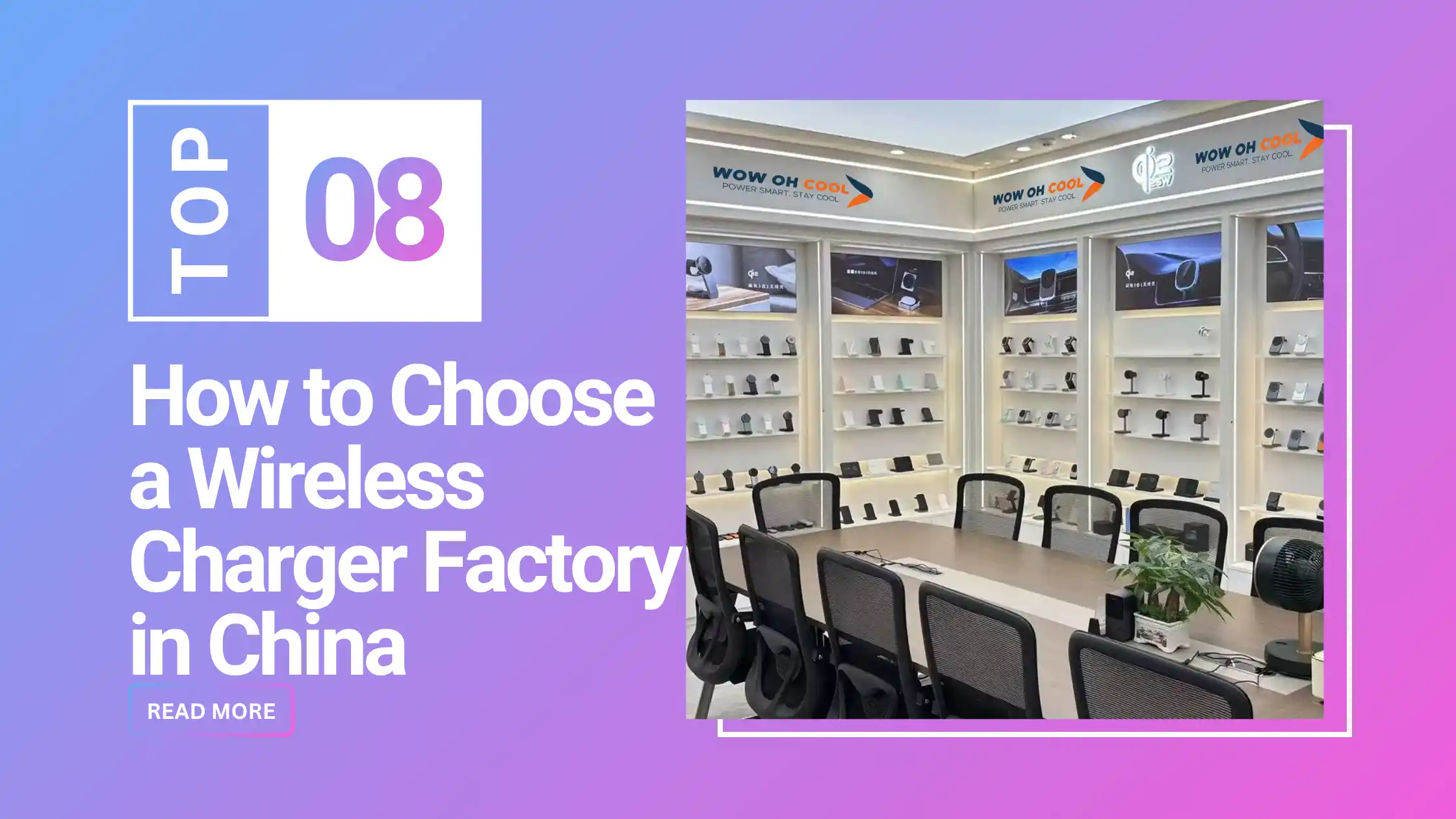
Finding a reliable wireless charger factory in China can feel like searching for a needle in a haystack. With thousands of manufacturers claiming to offer Grade A components with less than 0.3% defect rate, how do you separate the real factories from trading companies?
This guide walks you through the complete process of verifying and selecting a wireless charger manufacturer in China, from initial research to final partnership. Whether you're an Amazon seller, brand owner, or procurement manager, you'll learn exactly what to look for and what questions to ask.
At WOWOHCOOL, we've helped over 500 global brands source high-quality charging solutions since 2013. This guide distills our decade of experience into actionable steps you can use immediately.
According to a 2024 Alibaba supplier quality report, only 12% of electronics suppliers on B2B platforms pass comprehensive third-party factory audits, highlighting the importance of independent verification before committing to a partner.
According to IBISWorld, the global electronics OEM/ODM market is estimated at $280 billion, with China-based manufacturers representing approximately 65% of total production capacity. This concentration makes China the primary destination for wireless charger sourcing.
Table of Contents
1. How to Verify Qi2 and WPC Membership?
Why is WPC (Wireless Power Consortium) membership critical? Without proper membership, factories cannot legally use the Qi logo, exposing your brand to legal risks and product recalls.
The latest Qi2.2 standard (released July 2025) supports up to 25W charging with Magnetic Power Profile (MPP), matching Apple MagSafe performance without Apple certification costs. With over 1.5 billion Qi-compatible devices worldwide, choosing a Qi2-certified factory is non-negotiable for market access.
Qi2 Certification: Key Facts
Certification timeline
Return rate (certified)
Return rate (non-certified)
How to Verify WPC Membership (Step-by-Step)
Visit the WPC Member Directory and search for the factory's legal company name.
Check the Qi Certified Products Database for their specific product models.
Request the factory's WPC membership certificate and cross-reference the membership ID with the online database.
Verify their products carry the official Qi logo with a valid registration number — counterfeit logos are common among trading companies.
Cost Consideration
Qi2 certification adds approximately 15-25% to unit cost compared to non-certified products. However, this investment pays for itself through lower return rates (saving 6-10% in reverse logistics costs) and access to premium retail channels that require certification.
Learn more: Qi2 vs MagSafe Guide → | Qi Certification Guide →
2. FOD (Foreign Object Detection) Testing
Core Pain Point: If users place coins or metal objects on the charger, will it overheat or catch fire? This is the #1 cause of wireless charger returns.
Expert Recommendation
Request the factory to demonstrate their FOD algorithm sensitivity. Quality factories should detect metal objects within 2mm of the charging surface.
WOWOHCOOL Solution
Our wireless charger solutions use NP0 capacitors to ensure stable FOD detection even under high-temperature conditions. This premium component prevents false triggers and ensures safety compliance.
3. Why Does Coil Quality Matter for Wireless Chargers?
Coil quality directly affects charging efficiency and heat generation. Here's how professional factories compare:
| Feature | Low-Cost Factory (Generic) | Professional Factory (WOWOHCOOL) |
|---|---|---|
| Coil Material | Thin Copper-Clad Aluminum | High-Purity Oxygen-Free Copper |
| Magnet Strength | N35 Grade (Weak) | N52H Grade (Strong/Heat Resistant) |
| Efficiency | Below 70% | 80% - 85% (High Efficiency) |
| Shielding | Thin Ferrite Sheet | High-Density Composite Shielding |
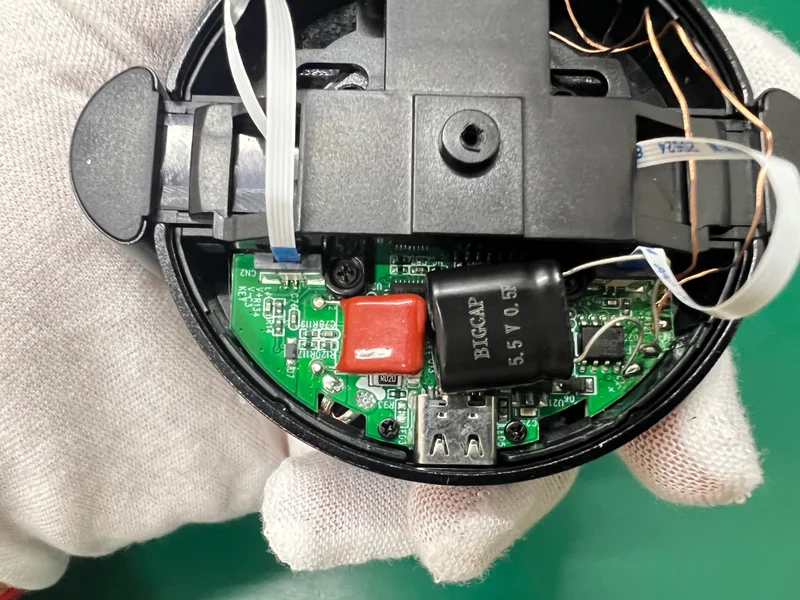
High-quality coil with proper shielding and FOD detection components
4. Thermal Management and Shell Materials
Wireless charging generates heat — the key is how the factory manages it. Poor thermal design leads to slower charging and safety hazards.
Thermal Pad
Check if factory uses thermal interface materials (thermal pads/silicone) between coil and shell to transfer heat away from the phone.
Aluminum Base
Premium factories use aluminum alloy base plates for superior heat dissipation compared to plastic-only designs.
5. PCBA Surface SMT Quality
Clean SMT production lines determine PCBA failure rates. Request to see their workshop photos and reflow oven specifications.
Expert Tip
If a factory quotes you a Qi2 price without a real MPP module, your product will be limited to 5W on iPhones. Always ask for the module source and verify it has MPP certification.
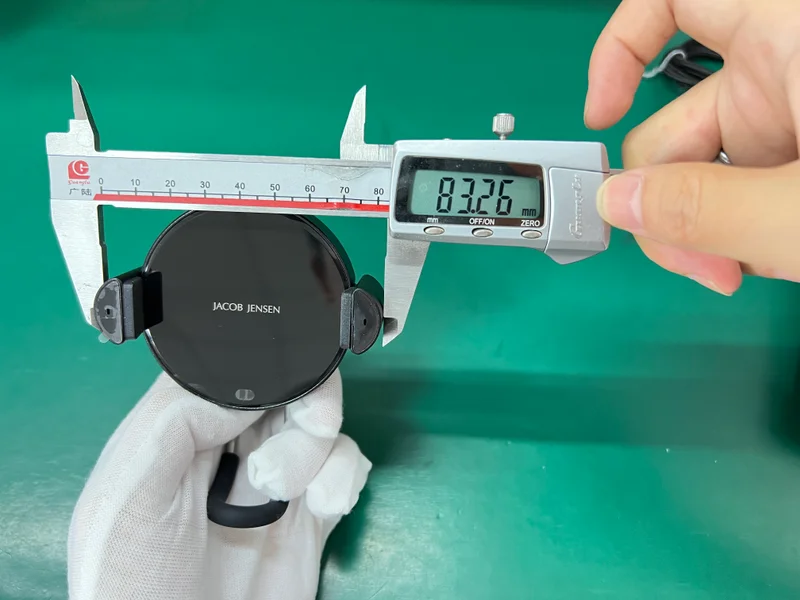
Professional QC inspection ensures zero-defect production for B2B orders
6. Why Source Wireless Chargers from China?
China remains the world's manufacturing hub for consumer electronics, and wireless chargers are no exception. The global wireless charging market is projected to reach $45.92 billion in 2026 (Fortune Business Insights), growing at a 22.8% CAGR through 2034. Asia-Pacific accounts for 53% of this market ($19.78B), with China representing approximately 65% of total production capacity. Here's why B2B buyers choose Chinese factories:
Competitive Pricing
Factory direct means no middleman markup. Prices are typically 40-60% lower than sourcing from distributors. View our products for current pricing.
Production Capacity
Monthly output of 1M+ units available. Scale to meet any order volume without compromising quality.
Technical Expertise
10+ years experience in charging technology. Access to latest standards like Qi2 and MagSafe. Learn about our R&D.
Certification Support
Factories navigate CE, FCC, Qi certification. Full compliance documentation provided. Our OEM/ODM services include full certification handling.
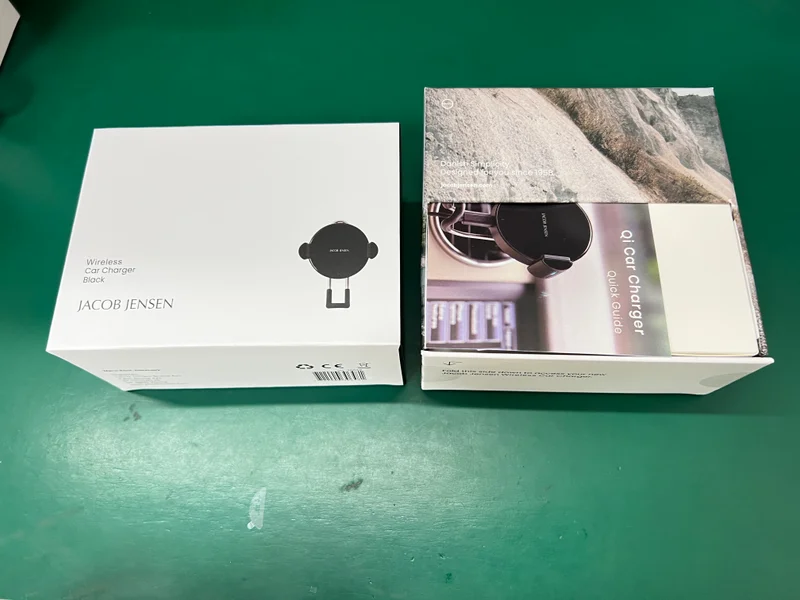
Professional retail packaging for B2B wholesale orders

Packaged products ready for international shipping
7. Factory vs Trading Company: What's the Difference?
Understanding the difference between a real factory and a trading company is crucial. Here's how they differ:
Related: OEM vs ODM: Complete Guide →
8. How to Verify a Legitimate Factory
Before committing to any supplier, verify their legitimacy through these steps:
Check Business Registration
Verify the factory's business license. A legitimate manufacturing facility will have import/export license, ISO 9001 certification capability, and a physical factory address.
Request Factory Documentation
Ask for factory photos (including production lines), employee count verification, business license copy, and ISO certification if claimed.
Verify Contact Information
Legitimate factories have direct phone numbers, company email domains (not Gmail/Yahoo), and respond promptly during business hours.
Check Trade Records
Request export data or check Alibaba trade records. Real factories have documented export history.
Red Flag
If they only send product catalogs without factory documentation, you're likely dealing with a trading company, not a manufacturer. Check our sourcing guides for more tips.
9. Key Questions to Ask Potential Suppliers
Use this checklist when evaluating wireless charger factories:
About Production
- , What is your monthly production capacity?
- , What is your minimum order quantity (MOQ)?
- , How long is the production lead time?
- , Can you provide samples before bulk order?
About Quality
- , What is your defect rate?
- , What testing do you perform on each unit?
- , Do you have ISO 9001 certification?
- , Can you provide pre-shipment inspection reports?
About Certifications
- , What certifications do your products have?
- , Are CE, FCC, and Qi certificates available?
- , Who performs the certification testing?
- , Can you assist with additional market certifications?
About Customization
- , What logo printing options do you offer?
- , Can you customize product colors and packaging?
- , Do you provide custom ID design services?
- , What is the tooling cost for custom molds?
10. Understanding Quality Control Processes
Quality control is paramount when sourcing wireless chargers. Here's what to expect from a professional factory:
Typical QC Process
IQC
Incoming Quality Control - Raw material inspection
IPQC
In-Process Quality Control
FQC
Final Quality Control
OQC
Outgoing Quality Control
Professional factories typically perform aging tests (2-4 hours) on 100% of wireless chargers before shipping. The best factories maintain defect rates below 1%, with some achieving under 0.3%.
Learn More About Quality Standards
For detailed information on international quality management standards, visit ISO 9001:2015 or learn about Qi certification requirements for wireless charging products. Additionally, the International Electrotechnical Commission provides comprehensive safety standards for electronic products.
Related: Quality Control Guide → | Qi Certification Guide →
11. Certifications You Need to Know
Understanding certifications is essential for market compliance:
12. Red Flags to Watch Out For
Watch for these warning signs when evaluating factories:
Unrealistically Low Prices
If the price seems too good to be true, it probably is. Quality has a cost.
Refuses to Provide Documentation
Legitimate factories readily provide business licenses, certifications, and factory photos.
Poor Communication
Slow responses or vague answers often indicate reliability issues.
No Sample Policy
Refusing to provide samples before bulk orders is a major red flag.
Can't Verify Certifications
Always verify certificates with issuing bodies. Fake certifications are common.
13. Factory Visit Checklist
If possible, visit the factory before placing large orders. Use this checklist:
Production Area
- SMT production lines
- Assembly lines
- Testing equipment
- Packaging area
Quality Control
- Testing lab
- Aging test area
- QC team size
- Documentation
Office & Staff
- R&D department
- Sales team
- English proficiency
- Management structure
Certifications
- ISO 9001 certificate
- Product certificates
- Business license
- Export license
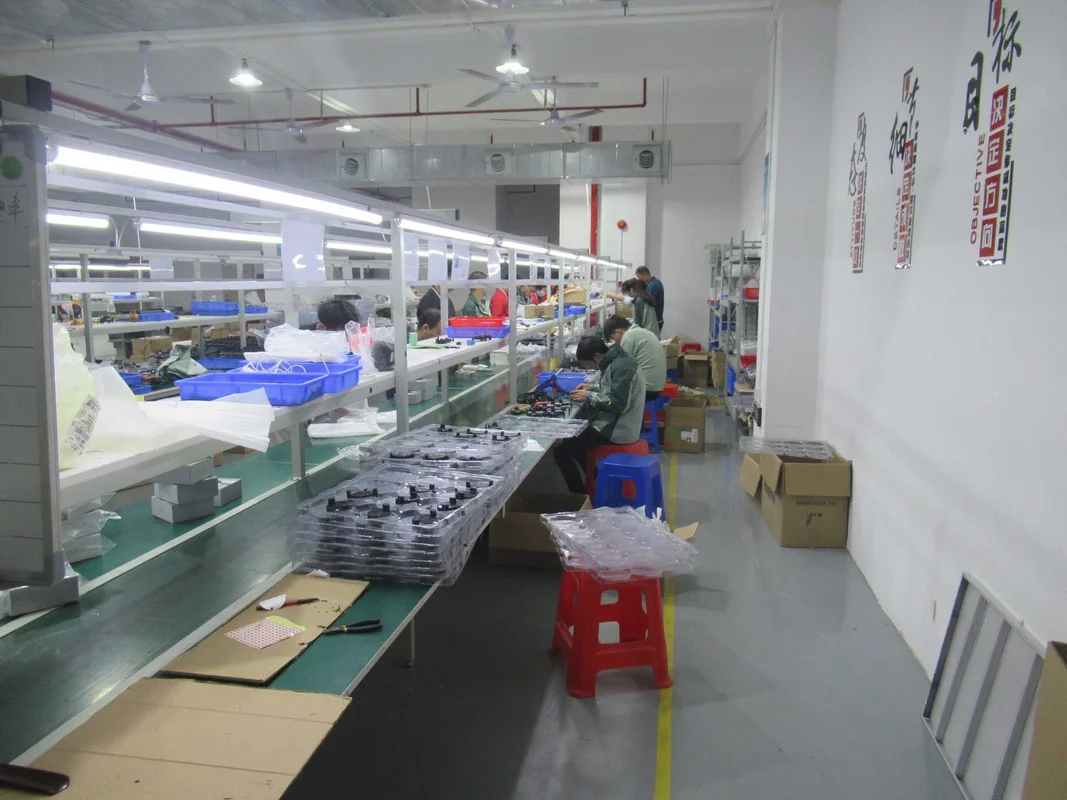
Automated SMT production line - what to look for during factory visits
14. Sample Evaluation Process
Before committing to bulk orders, evaluate samples systematically. This sample evaluation process helps you make data-driven decisions:
Sample Evaluation Timeline
Request Multiple Samples
Request samples from 3-5 factories simultaneously. Specify exact requirements including charging speed, materials, and certifications needed.
Physical Inspection
Check build quality, finish, weight, and alignment. Test all charging positions and verify LED indicators function correctly.
Performance Testing
Test charging efficiency using professional equipment. Check heat generation during extended charging sessions and verify Qi compatibility.
Certification Verification
Verify certificates directly with issuing bodies. Request test reports and cross-reference with factory claims.
Sample Evaluation Criteria
Appearance (20%)
- , Surface finish quality
- , Color accuracy
- , Logo print durability
- , Packaging integrity
Functionality (50%)
- , Charging speed
- , Compatibility
- , Heat management
- , Safety features
Documentation (30%)
- , Test reports
- , Certificates
- , Compliance docs
- , Manuals accuracy
Pro Tip
Request 10-20 samples for extended testing. This allows you to identify consistency issues across batches — a critical indicator of production quality control.
15. Communication & Language Considerations
Effective communication determines the success of your factory relationship. Here's how to navigate language barriers:
Recommended Communication Channels
Primary Channels
- WeChat - Quick updates, images
- Email - Formal documentation
- WhatsApp - International clients
- Phone - Urgent matters
Response Time Expectations
- WeChat: 2-4 hours
- Email: 24 hours
- Phone: Immediate
Language Best Practices
- Use clear, simple English - Avoid idioms, slang, and complex technical jargon
- Provide visual references - Include diagrams, photos, and videos when explaining requirements
- Confirm understanding - Request written confirmation for critical specifications
- Document everything - Keep written records of all verbal agreements
- Use translation tools wisely - Google Translate can help but verify critical details manually
Many professional Chinese factories now have dedicated English-speaking sales teams. WOWOHCOOL, for example, provides dedicated account managers who communicate in fluent English, ensuring zero misunderstandings on specifications.
Learn More About Cross-Cultural Communication
For insights on navigating international business communication, visit U. S. Commercial Service or explore resources from the World Trade Center Association.
16. Payment Terms & Trade Assurance
Understanding payment terms protects both parties. Here's what B2B buyers should know:
| Payment Method | Pros | Cons | Best For |
|---|---|---|---|
| T/T (Wire Transfer) | Low fees, fast, widely accepted | No buyer protection | Established relationships |
| L/C (Letter of Credit) | Bank guarantee, security | Complex, expensive | Large orders, new suppliers |
| PayPal | Buyer protection, easy | High fees (2-4%) | Small orders, samples |
| Alibaba Trade Assurance | Buyer protection, dispute resolution | Limited to platform orders | New supplier relationships |
Standard Payment Terms for New Orders
Deposit to start production
Balance before shipment
For sample orders
Payment Red Flags
- , Factory requests 100% payment before production
- , Unusual payment methods or third-party accounts
- , Refusal to provide bank details for verification
- , Pressure to rush payment decisions
- , Requests for payment in cryptocurrency
17. Visit Requirements & Virtual Tours
Factory visits provide invaluable insights that photos and videos cannot convey. Here's how to plan yours:
Pre-Visit Preparation Checklist
Documentation to Request
- Business license copy
- ISO 9001 certificate
- Export license
- Product certificates
Things to Arrange
- Visa invitation letter
- Flight and accommodation
- Translator if needed
- Sample testing equipment
What to Inspect During Your Visit
Production Facilities
- , SMT production lines
- , Assembly operations
- , Packaging lines
- , Warehouse conditions
Quality Systems
- , Testing laboratory
- , QC personnel count
- , Inspection procedures
- , Documentation systems
Company Overview
- , Employee facilities
- , Management structure
- , R&D department
- , Company culture
Virtual Tour Alternative
Cannot visit in person? Request a live video tour via WeChat or Zoom. Professional factories should offer:
- Live production line walkthrough
- Real-time Q&A with engineers
- Sample testing demonstration
- Certification document review
At WOWOHCOOL, we welcome clients to visit our 5,000 sq ft facility in Shenzhen. We also offer comprehensive virtual tours with our engineering team for international clients.
18. Long-Term Partnership Considerations
Building a sustainable relationship with your factory leads to better pricing, priority production, and consistent quality. Here's how to establish a successful long-term partnership:
Growth Benefits
- Volume discounts (5-15% after first year)
- Priority production scheduling
- Access to new product development
- Dedicated account management
Trust Building
- Consistent communication
- Transparent issue resolution
- Regular business reviews
- Fair payment practices
Key Elements of a Successful Partnership
Clear Specifications
Provide detailed technical specifications and quality standards in writing. This prevents misunderstandings and ensures consistency.
Regular Feedback
Share market feedback with your factory. This helps them improve products and gives you early access to upgrades.
Forecast Planning
Provide 3-6 month demand forecasts when possible. This helps factories plan capacity and often results in better pricing.
Mutual Problem-Solving
When issues arise (and they will), work together on solutions. This builds trust and prevents future problems.
Long-term partnerships work best when both parties benefit. Our power charger clients typically see 10-20% cost savings in year two, plus priority access to new Qi2 and MagSafe compatible products.
Learn More About Supply Chain Management
For deeper insights into managing international supplier relationships, explore resources from the APICS Supply Chain Council or review guidelines from the International Organization for Standardization.
19. Wireless Charger Manufacturing Cost Breakdown
Understanding cost structure helps you evaluate quotes accurately and negotiate better terms. Here's what drives wireless charger pricing:
| Cost Component | % of Unit Cost | Key Variables |
|---|---|---|
| Coil + Magnets | 25-35% | N35 vs N52H grade, copper vs CCA |
| PCBA + IC Chipset | 20-30% | MPP module, FOD algorithm IC |
| Shell + Thermal Materials | 15-20% | Plastic vs aluminum, thermal pads |
| Assembly + QC Labor | 10-15% | Automation level, QC rigor |
| Certification + Compliance | 5-10% | Qi2, CE, FCC per-unit amortization |
| Packaging + Accessories | 5-8% | Retail box, cable, manual |
Basic 5W Qi Pad
MOQ 1,000+
Qi2 15W with MPP
MOQ 500+
3-in-1 Qi2 Station
MOQ 500+
Price vs Quality Trade-offs
If a factory quotes significantly below these ranges, investigate what's being cut. Common cost-cutting areas that affect quality:
- • CCA wire instead of oxygen-free copper (reduces efficiency by 10-15%)
- • N35 magnets instead of N52H (weaker alignment, drops with heat)
- • No real MPP module (limits iPhone charging to 5W instead of 15W)
- • Skipping aging tests (defects surface after customer receives product)
Related: Import Costs Guide → | Shipping from China →
20. Your 12-Week Factory Sourcing Action Plan
Follow this proven timeline to go from initial research to first bulk order with confidence:
Weeks 1-2: Research & Shortlist
- • Define product specifications (wattage, form factor, certifications needed)
- • Search WPC member directory for Qi2-certified manufacturers
- • Shortlist 5-8 factories from Alibaba, GlobalSources, and direct referrals
- • Send initial inquiry with detailed requirements document
Weeks 3-4: Verification & Screening
- • Verify business licenses on National Enterprise Credit Information System
- • Cross-check WPC membership and Qi certification numbers
- • Request factory documentation (ISO cert, production photos, export license)
- • Eliminate trading companies — narrow to 3-4 real factories
Weeks 5-6: Samples & Testing
- • Order samples from top 3 factories (10-20 units each)
- • Test charging efficiency, heat generation, and FOD response
- • Verify Qi2 MPP alignment with iPhone 15/16 series
- • Compare build quality, packaging, and documentation
Weeks 7-8: Factory Audit & Negotiation
- • Schedule virtual tour or on-site visit for top 1-2 candidates
- • Inspect SMT lines, QC lab, and aging test area
- • Negotiate pricing, MOQ, payment terms (target 30/70 T/T)
- • Discuss customization options (logo, color, packaging)
Weeks 9-10: Trial Order
- • Place trial order (100-500 units) to validate production consistency
- • Arrange pre-shipment inspection (PSI) by third-party QC
- • Verify packaging, labeling, and certification marks
- • Test random samples from production batch
Weeks 11-12: Scale & Partnership
- • Review trial order results — Go/No-go decision
- • Sign supply agreement with quality guarantees and penalty clauses
- • Place first bulk order with agreed payment terms
- • Establish regular communication cadence and QC reporting
Decision Framework: Go / No-Go
GO if all 3 met:
- ✓ WPC member + Qi2 certified products
- ✓ FOD test report + sample passes your testing
- ✓ Provides samples without hesitation
NO-GO if any 1 present:
- ✗ Cannot verify WPC membership
- ✗ Refuses factory tour or documentation
- ✗ Demands 100% payment upfront
Related: Factory Verification Checklist → | Choose a Reliable Supplier →
"Factory auditing is the most underrated step in the sourcing process. Many buyers skip it and pay the price later," says Nina Nico, Supply Chain Expert at WOWOHCOOL. "A proper audit covering production lines, QC labs, and certification documentation can prevent 90% of the common supply chain problems we see."
For a complete verification framework, download our factory verification checklist. Also read our guide on how to choose a reliable China charger supplier for additional sourcing best practices.
WOWOHCOOL FACTORY STAT
WOWOHCOOL's 5,000 sqm factory in Shenzhen has been producing wireless chargers, power banks, GaN chargers, and car chargers since 2013, with 1,000,000+ units monthly capacity, ISO 9001 certification, and 4.7-4.9 average ratings across all product categories.
Comments
Post a Comment