What if the battery in your next power bank won't catch fire, and it holds 30% more charge?
Table of Contents
QUICK ANSWER
What is a semi-solid-state power bank and should I OEM one? Semi-solid-state power banks use a gel electrolyte instead of liquid, eliminating thermal runaway risk while delivering 25-35% higher energy density and 500-800+ cycle life. At just a 15-25% price premium over Li-polymer, they are becoming the new standard for premium power banks in 2026, especially for brands targeting the EU and China markets where new safety regulations take effect this year. WOWOHCOOL offers semi-solid-state power bank OEM from 5,000mAh to 27,000mAh with PD 3.1 up to 140W.
1. What Is a Semi-Solid-State Battery?
A semi-solid-state battery replaces the liquid electrolyte found in conventional Li-polymer cells with a gel-like or paste electrolyte. This isn't a full solid-state battery, which uses a solid ceramic electrolyte and isn't yet mass-produced for consumer electronics. It's a hybrid, the best of both worlds.
| Feature | Conventional Li-Polymer | Semi-Solid-State |
|---|---|---|
| Electrolyte | Liquid | Gel/paste |
| Energy Density | Baseline | +25-35% higher |
| Thermal Runaway Risk | Present | Near-zero |
| Cycle Life | 300-500 cycles | 500-800+ cycles |
| Production Maturity | Mass market | Scaling rapidly |
| Price Premium | Baseline | +15-25% |
The key advantage for your brand: semi-solid-state cells don't catch fire. Even when punctured, overcharged, or exposed to high temperatures, the gel electrolyte doesn't ignite. For a brand selling power banks through Amazon FBA or retail distribution, that's a product liability game-changer.
According to BloombergNEF, semi-solid-state batteries offer 30% higher energy density than conventional Li-polymer cells while eliminating thermal runaway risk. This combination of safety and performance has made semi-solid-state the fastest-growing segment in the power bank industry, with major brands transitioning their product lines to use this technology advantage.
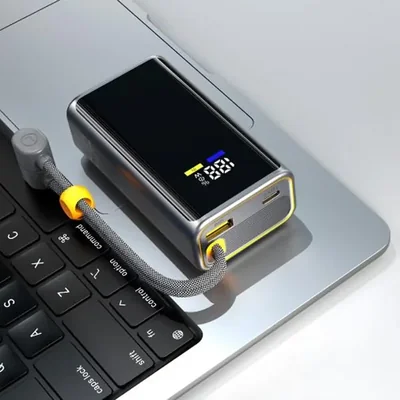
Semi-solid-state power bank with 30% higher energy density and zero thermal runaway risk
2. Why Semi-Solid-State Matters for OEM/ODM Brands
"Last year, Marcus, a procurement manager for a European electronics distributor, received a shipment of 5,000 standard Li-polymer power banks. Three units swelled during the 4-hour aging test. Two more failed QC after the drop test. He rejected the entire batch and lost six weeks. His CEO wanted to know why they weren't using safer cells."
This scenario plays out more often than most buyers admit. Here's why gel electrolyte technology solves it:
Thermal Safety Is Non-Negotiable
The liquid electrolyte in conventional Li-polymer batteries is flammable. These batteries eliminate the liquid electrolyte entirely, removing the fire risk at the chemical level. For brands selling in the EU or shipping via air freight, this safety advantage is increasingly important.
Higher Density Means Slimmer Products
A semi-solid-state cell delivers roughly 30% higher energy density. That translates to a slimmer power bank with the same capacity, or higher capacity in the same form factor. WOWOHCOOL's WOP09 series achieves 10,000mAh in a profile 50% thinner than standard.
Longer Cycle Life, Better Brand Reputation
500-800 cycles vs. 300-500 means fewer returns and better reviews. Browse our semi-solid-state power bank lineup →
"The shift to semi-solid-state is the most significant battery safety advancement I've seen in my career," says Nina Nico, OEM Technical Lead at WOWOHCOOL. "Brands that adopt this technology now are not just reducing product liability, they are building a powerful safety narrative that resonates with today's quality-conscious consumers and retail buyers."
Brands Already Shipping Semi-Solid-State (June 2026)
- BMX "SolidSafe" — 6.8mm ultra-thin, Qi2 magnetic, from $59 (Android Authority)
- TORRAS — EV battery tech positioning, thermal management focus ($80-120)
- Statik "State" — 5K power bank, praised in Macworld review
- Momax — Qi2 25W magnetic with semi-solid cells, EU market
The technology has hit consumer retail — now is the time for OEM brands to secure supply chain positioning before demand outpaces production capacity.
3. How to Evaluate a Semi-Solid-State Supplier
Finding a legitimate manufacturer is harder than it sounds. Several factories claim semi-solid-state capability but are actually shipping enhanced Li-polymer with a marketing label.
1. Request Cell-Level Test Reports
Ask for cycle life test data at 1C charge/discharge rate (should exceed 500 cycles), thermal runaway test results, energy density measurements, and UN38.3 certification.
2. Ask About Electrolyte Formulation
A legitimate manufacturer should describe their gel polymer electrolyte without hesitation. Look for "in-situ polymerization" or patent filings.
3. Visit or Video Tour the Factory
"When Chen-Wei visited his supplier's factory in Shenzhen, he asked to see the electrolyte mixing line. The factory manager showed him a dry room with specialized equipment, not the standard liquid filling line. That's when he knew the technology was real."
4. Verify Certifications
Semi-solid-state cells require UN38.3 certification for air shipping. Request the certificate and verify it covers your specific cell model.
Red flags: can't explain cell technology technically, refuses video tour, uncertified test labs, pricing too close to standard Li-polymer.
Certification Checklist for Importers
Before placing your OEM order, verify that your supplier provides these certifications for semi-solid-state power banks:
- UN38.3, required for air transport, verifies cell-level safety under simulated flight conditions
- CE / RoHS, mandatory for EU market entry, confirms electromagnetic compatibility and restricted substance compliance
- FCC, required for US market, certifies radio frequency emissions are within legal limits
- MSDS, Material Safety Data Sheet for lithium battery shipping documentation
- Nail penetration test report, verifies thermal runaway safety claim for semi-solid-state cells
WOWOHCOOL provides all documentation with every OEM order and assists with regional certification requirements for 50+ countries.
Case Study: Why Verification Matters — Donut Lab Fraud (June 2026)
In June 2026, Finnish startup Donut Lab was exposed for marketing standard lithium-ion cells as "solid-state batteries." The company raised $25M from 1,300+ investors and reached a $1.25B valuation before independent testing by 20+ battery experts proved the cells were ordinary NCM chemistry — not the claimed 400 Wh/kg sodium-ion solid-state. This case underlines why OEM buyers must independently verify cell-level test reports and never rely solely on marketing claims.
4. What Charging Speed Does PD 3.1 Support?
These gel-based cells have lower internal resistance, making them ideal for high-power applications. Combined with PD 3.1, a semi-solid-state power bank can deliver up to 140W, enough for a MacBook Pro 16 at full speed.
| Capacity | Max Output | Best For |
|---|---|---|
| 5,000mAh | 20W PD | Pocket/jetpack chargers |
| 10,000mAh | 45W PD | Phone + tablet everyday carry |
| 20,000mAh | 100W PD | Laptop + phone + tablet |
| 27,000-40,000mAh | 140W PD 3.1 | Multi-device power stations |
Pairing a semi-solid-state power bank with a GaN V charger creates a complete fast-charging ecosystem, GaN V chargers provide the compact, cool-running power source that maximizes the semi-solid-state battery's fast-charging capabilities while maintaining optimal safety margins.
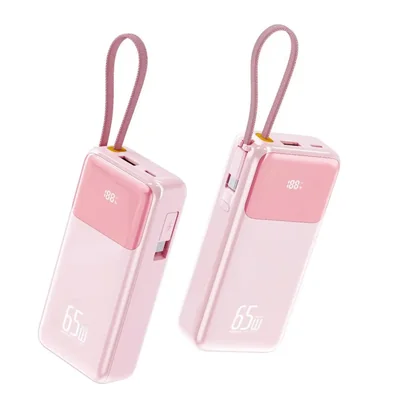
Semi-solid-state power bank with PD 3.1 up to 140W for laptop charging
5. How Does Semi-Solid-State Compare in Cost?
"The e-commerce manager of a US accessory brand ran the numbers last quarter. Semi-solid-state cells added 18% to his unit cost. But his return rate dropped from 2.3% to 0.4%, and his Amazon rating went from 4.1 to 4.7 stars."
For most brands, the 15-25% premium pays for itself within 6-12 months through reduced returns, better reviews, and the ability to position as a "safer battery" brand.
Understanding these cost factors and working with an experienced OEM partner ensures your import strategy remains profitable and competitive in global markets. WOWOHCOOL's logistics team is ready to help you optimize your supply chain from Shenzhen to your warehouse.
6. GB38031-2025: China's New Safety Standard
Effective June 2026, China's updated GB38031-2025 safety standard now requires portable power banks to pass nail penetration tests with zero fire or explosion. This is a major regulatory tailwind for semi-solid-state technology — conventional Li-polymer batteries struggle to pass this test, while gel electrolyte cells pass it by design.
What this means for OEM buyers: If you sell into the Chinese market or export from Chinese factories, your products must comply. Semi-solid-state cells inherently meet the nail penetration requirement, eliminating costly re-engineering of Li-polymer products. Brands that switch now avoid last-minute compliance scrambles.
WOWOHCOOL's semi-solid-state power banks are already GB38031-2025 compliant, with full nail penetration test reports available for every cell batch.
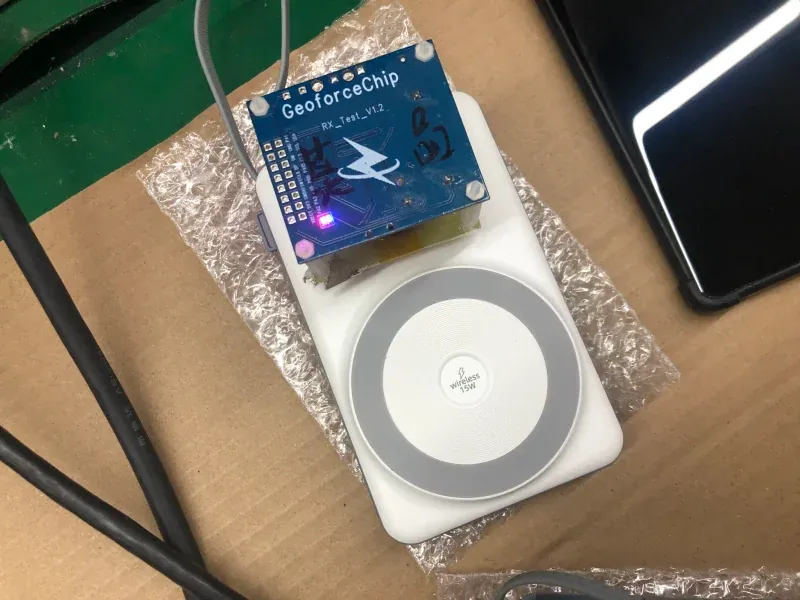
Every semi-solid-state power bank undergoes functionality QC testing before shipment
7. Semi-Solid-State Manufacturing Process
Understanding the manufacturing process helps you evaluate suppliers and set realistic timelines. Semi-solid-state battery production differs from conventional Li-polymer in several key areas:
01Gel Electrolyte Mixing
Unlike liquid electrolyte injection used in standard Li-polymer cells, semi-solid-state batteries use a specialized gel polymer mixing process. This requires dedicated equipment and dry-room conditions with less than 1% humidity.
02Cell Assembly & Formation
The electrode coating and stacking process is similar to Li-polymer, but the formation cycling takes 20-30% longer due to the gel electrolyte needing more time to fully penetrate the electrode materials.
03Quality Control Testing
Each cell undergoes rigorous testing including internal resistance measurement, capacity grading, and nail penetration tests to verify safety. Semi-solid-state cells must pass the same UN38.3 certification as conventional Li-polymer cells.
As production volumes increase and manufacturing processes mature, the cost gap between semi-solid-state and conventional Li-polymer cells is expected to narrow significantly. Several major Chinese battery manufacturers have announced capacity expansions for semi-solid-state production, signaling strong industry confidence in this technology's future. Brands that adopt semi-solid-state now will benefit from first-mover advantage in the safer battery market segment.
According to MarketsAndMarkets, the global power bank market is expected to reach $18.5 billion by 2028, growing at a CAGR of 8.2%. Semi-solid-state technology is expected to capture an increasing share of this growth as production scales and costs decline toward parity with conventional Li-polymer cells over the next 18-24 months.
OEM Development Timeline
Developing a semi-solid-state power bank follows a structured process: cell specification and supplier qualification (2-3 weeks), BMS design optimized for gel electrolyte characteristics (2-3 weeks), PCBA and enclosure design (3-4 weeks), prototype assembly and testing including cycle life verification (3-4 weeks), certification (2-3 weeks for UN38.3), and mass production (3-4 weeks).
Total timeline from concept to production-ready samples is approximately 12-17 weeks for a new OEM design. ODM solutions using existing semi-solid-state platforms can be ready in 5-7 weeks, making them ideal for brands entering the market quickly.
WOWOHCOOL FACTORY STAT
WOWOHCOOL's semi-solid-state power banks, featured at CES 2026, deliver 50% thinner profiles and 30% higher energy density with near-zero thermal runaway risk. Supporting PD 3.1 up to 140W with MOQ starting at 500 units, they are available for OEM/ODM with your branding.
8. Frequently Asked Questions
Is semi-solid-state the same as solid-state?
No. True solid-state uses ceramic electrolyte and isn't mass-produced yet. Semi-solid-state uses gel, available today.
Can semi-solid-state batteries explode?
Near-zero risk. The gel electrolyte doesn't ignite even under extreme conditions.
What's the MOQ?
500 units for standard ODM models. Custom OEM projects with tooling require 1,000-2,000 units.
Do they work with fast charging?
Yes. Better than Li-polymer due to lower internal resistance. PD 3.1 up to 140W is achievable.
Comments
Post a Comment